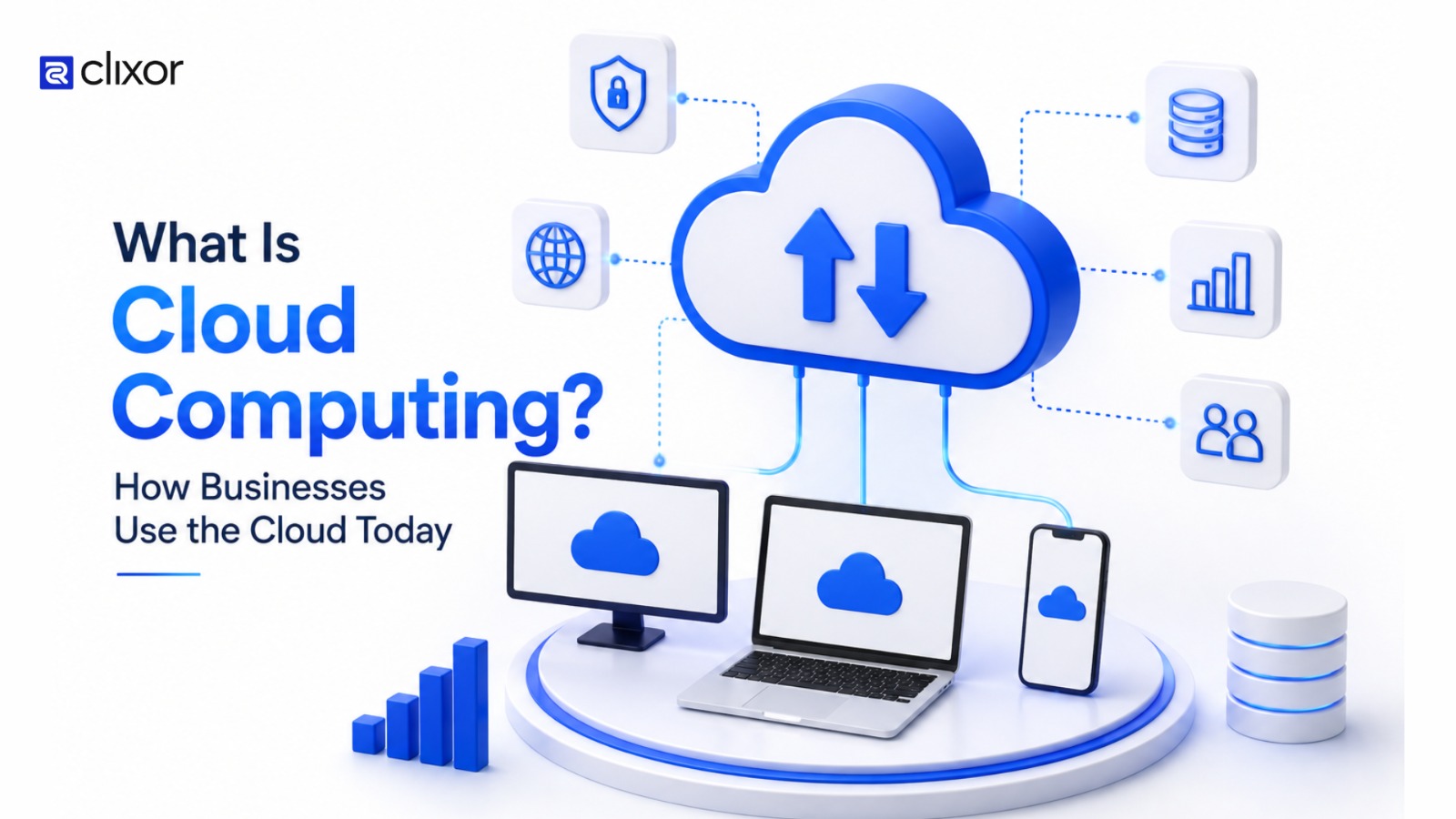
What Is Cloud Computing? How Businesses Use the Cloud Today
- What Is Cloud Computing?
- How Do Businesses Use Cloud Computing?
- Benefits of Cloud Computing
- Is Cloud Computing Secure?
- Cloud Computing for Small Businesses
- Cloud Computing and Business Growth
- The Future of Cloud Computing
- Conclusion
Businesses today rely on digital tools to store information, communicate with teams, manage customers, and run daily operations. Cloud computing has made these activities easier by allowing businesses to access computing resources over the internet rather than relying entirely on physical servers.
What Is Cloud Computing?
Cloud computing means using services such as storage, servers, databases, software, and computing power over the internet.
Instead of purchasing and maintaining expensive hardware, businesses can access cloud services based on their requirements. This makes it easier to manage business resources and access them from different locations.
For example, a company can store important documents in the cloud and allow authorized employees to access them from their laptops or mobile devices.
How Do Businesses Use Cloud Computing?
Cloud computing is now used for many everyday business activities.
Cloud Storage
Businesses can store documents, images, reports, customer information, and other files online. This makes important information easier to access, share, and manage.
Business Applications
Many companies use cloud-based applications for accounting, CRM, project management, communication, and other business functions.
Remote Work
Cloud services allow employees to access business applications and files from different locations. This makes remote and hybrid work easier to manage.
Website and Application Hosting
Businesses can host websites, web applications, and APIs using cloud infrastructure without maintaining their own physical servers.
Data and Analytics
Cloud platforms provide computing resources that businesses can use to process and analyze large amounts of data. This can help organizations understand customers, measure performance, and make informed decisions.
Benefits of Cloud Computing
Cloud computing can provide several advantages to businesses:
- Flexibility: Resources can be adjusted as business requirements change.
- Accessibility: Employees can access cloud-based services from different locations.
- Scalability: Businesses can increase resources as they grow.
- Collaboration: Teams can work with shared information more easily.
- Reduced Hardware Dependency: Businesses may not need to maintain large amounts of physical infrastructure.
Is Cloud Computing Secure?
Cloud platforms provide security features such as encryption, authentication, monitoring, and access controls. However, businesses still need to configure their cloud environments correctly and protect user accounts and data.
Strong passwords, multi-factor authentication, proper permissions, regular backups, and security monitoring are important parts of a secure cloud setup.
Cloud Computing for Small Businesses
Cloud computing is not only for large companies. Small businesses can also use cloud services for everyday needs such as file storage, email, customer management, accounting, and team collaboration.
The main advantage is that businesses can access useful services without having to build a large IT infrastructure from the outset. This can make it easier for smaller companies to start, operate, and scale their digital processes.
Cloud Computing and Business Growth
As a business grows, its data, applications, and team requirements also increase. Cloud computing can provide the flexibility to expand digital resources without constantly investing in new physical infrastructure.
For growing businesses, this can make it easier to support more employees, customers, and operations while keeping their IT environment adaptable.
The Future of Cloud Computing
Cloud computing has become a regular part of modern business operations. As companies continue to use remote work, online applications, data analytics, and digital services, cloud-based infrastructure will remain an important role.
The goal should not be to move everything to the cloud simply because it is popular. Businesses should choose cloud solutions based on their actual requirements, security needs, budget, and long-term goals.
Conclusion
Cloud computing has changed the way businesses manage their digital resources. From storing files and supporting remote teams to hosting applications and analyzing data, the cloud can support many areas of modern business.
For businesses considering cloud adoption, the best place to start is with a simple question:
“What problem are we trying to solve?”
Once the requirement is clear, businesses can choose the right cloud solution to make their operations more flexible, accessible, and efficient.
Clixor Technologies helps businesses explore practical technology solutions that align with their goals, workflows, and growth requirements. With the right cloud strategy, businesses can build a more flexible and efficient digital environment for the future.