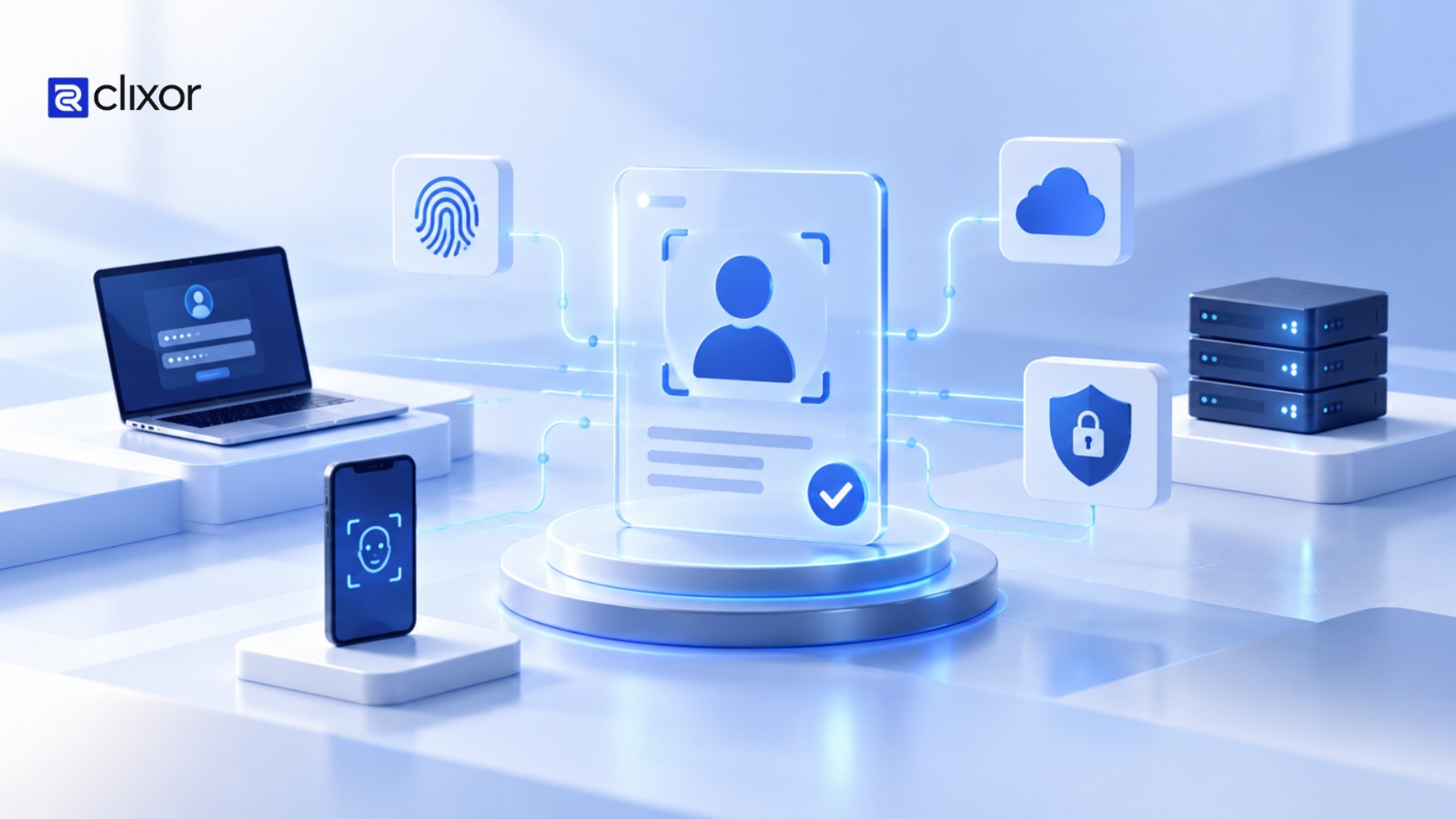
How Digital Identity Technology Is Evolving
Digital services are now part of everyday life. People use online platforms to access banking, healthcare, education, shopping, government services, and business applications. As more activities move online, confirming who a user is has become increasingly important.
Digital identity technology plays a major role here. Digital identity allows individuals to prove their identity when accessing online services without relying entirely on traditional usernames and passwords.
As technology evolves, digital identity is evolving too. New approaches such as biometrics, digital credentials, digital wallets, and decentralised identity are changing how people authenticate themselves online.
- What Is Digital Identity Technology?
- How Digital Identity Technology Is Evolving
- Why Digital Identity Matters for Businesses
- The Future of Digital Identity
- Frequently Asked Questions
- Conclusion
What Is Digital Identity Technology?
Digital identity technology refers to the tools and systems used to identify and authenticate people or organisations in digital environments.
A digital identity can include information such as a person's name, account details, authentication credentials, or verified digital credentials.
For example, when a user signs into a banking application using a password and biometric verification, the system uses different technologies to confirm that the person accessing the account is authorised.
The goal is to make digital access both secure and convenient.
How Digital Identity Technology Is Evolving
1. Passwords Are No Longer the Only Option
Passwords have traditionally been one of the most common methods of authentication. However, they can be forgotten, reused, or exposed through security incidents.
Modern authentication systems increasingly use additional methods, including multi-factor authentication, passkeys, and biometric verification.
This can allow users to confirm their identity using a device, fingerprint, face recognition, or another authentication factor rather than depending only on a password.
2. Biometrics Are Becoming More Common
Biometric authentication uses physical characteristics to help verify a person's identity.
Examples include:
- Fingerprint recognition
- Facial recognition
- Voice recognition
- Iris recognition
Biometric methods can make authentication more convenient because users do not need to remember another password.
However, biometric data is sensitive, so organisations need appropriate security and privacy controls when using it.
3. Digital Wallets Can Store Credentials
Digital wallets are also changing how people manage identity information.
Instead of carrying physical documents for every verification process, users may be able to store digital credentials on supported devices or applications.
These credentials can potentially be used to prove specific information without sharing unnecessary personal data.
For example, a digital credential could verify that a person meets a particular requirement without requiring the user to disclose unrelated information.
4. Decentralised Identity Is Emerging
Decentralised identity is another developing approach to digital identity.
Traditional identity systems often depend on a central organisation to store and verify identity information. Decentralised approaches can give users greater control over certain identity credentials and how they are shared.
The technology is still developing, but it is attracting interest for applications where privacy, portability, and user control are important.
Why Digital Identity Matters for Businesses
Businesses increasingly need secure ways to manage customer and employee access, especially as more services move online.
Digital identity technology can support applications such as:
- Customer account authentication
- Employee access management
- Online banking
- Healthcare portals
- E-commerce platforms
- Government services
- Business applications
For a technology company such as Clixor Technologies, digital identity can become an important part of building secure applications where users need reliable authentication and controlled access.
The right approach depends on the application's requirements, the type of information being protected, and the level of security needed.
The Future of Digital Identity
Digital identity is likely to become more integrated into the applications people use every day.
Authentication may become less visible to users while still providing stronger security. Devices, biometrics, digital credentials, and risk-based authentication can work together to determine whether access should be granted.
At the same time, businesses will need to consider privacy, data protection, interoperability, and user control when implementing identity systems.
Frequently Asked Questions
1. What is digital identity technology?
Digital identity technology consists of systems and tools used to identify and authenticate people or organisations in digital environments.
2. How is digital identity different from a password?
A password is one authentication method. Digital identity can involve multiple elements, including credentials, devices, biometrics, and authentication factors.
3. Is biometric authentication secure?
Biometric authentication can provide strong identity verification, but biometric information needs to be handled securely because it is sensitive personal data.
5. What is decentralised identity?
Decentralised identity is an approach that can give users greater control over digital identity credentials and how those credentials are shared across services. It is still developing, but it is attracting interest for applications where privacy, portability, and user control are important.
Decentralised identity is an approach that can give users greater control over digital identity credentials and how those credentials are shared across services.
5. Why is digital identity important for businesses?
Digital identity can help businesses manage user authentication, access control, and secure interactions across online applications and services.
Conclusion
Digital identity technology is evolving as people and businesses rely more heavily on digital services. Passwords are being complemented by biometrics, passkeys, digital credentials, and other authentication technologies.
The future of digital identity will not simply be about proving who someone is. It will also involve making authentication secure, convenient, privacy-conscious, and easier to use across different digital services.
For businesses, understanding these changes can help them design digital applications that provide secure access while creating a smoother experience for users.