How Edge Computing Is Changing Modern Application Architecture
Introduction
Modern applications are expected to respond quickly, handle large amounts of data, and support users across different locations. Traditional cloud architecture usually sends application data to centralized data centers for processing, which can delay real-time processing.
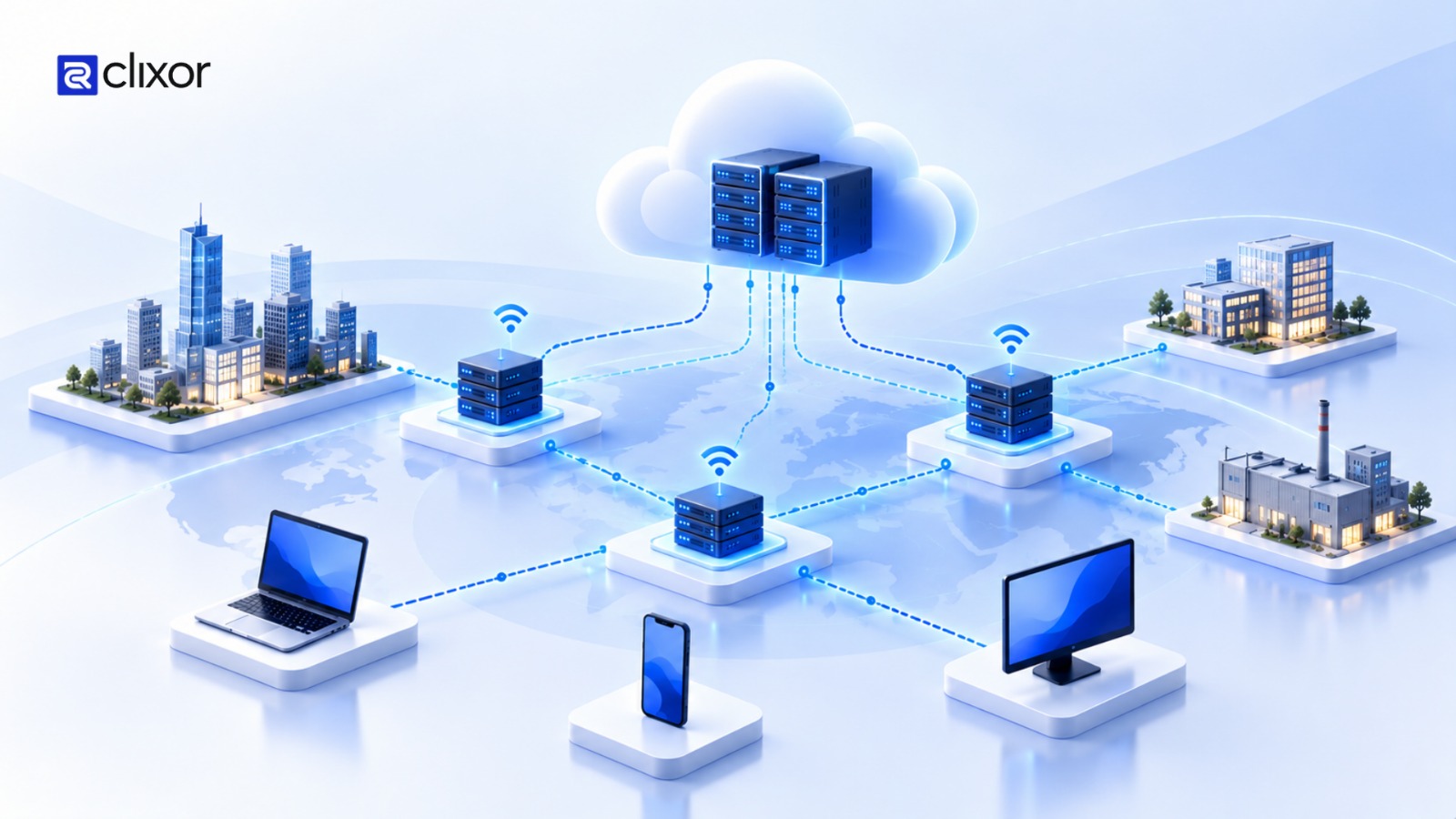
Edge computing offers a different approach by moving computing and data processing closer to where the data is generated. Instead of sending every request to a central cloud server, some workloads can be processed at nearby edge devices or edge locations.
This shift is changing how developers design, deploy, and manage modern application architecture.
- Introduction
- What Is Edge Computing?
- How Edge Computing Changes Application Architecture
- Edge Computing vs Cloud Computing
- Challenges of Edge Application Architecture
- How Businesses Can Use Edge Computing
- Frequently Asked Questions
- Conclusion
What Is Edge Computing?
Edge computing is a distributed computing approach in which data processing happens closer to the data source.
For example, consider a smart factory with hundreds of connected machines. Instead of sending every sensor reading to a distant cloud server, an edge system can process important data locally and send only the required information to the cloud.
This can reduce network delays and support faster application responses. AWS Edge Computing provides an overview of how computing can be performed closer to where data is generated.
How Edge Computing Changes Application Architecture
1. Processing Moves Closer to Users
Traditional applications often depend heavily on centralized servers. Edge architecture distributes some processing across multiple locations.
This is useful for applications where response time is important, such as:
- Real-Time Monitoring
- Connected Devices
- Video Processing
- Online Gaming
- Industrial Systems
- Smart Infrastructure
By processing data closer to users or devices, applications can respond without always depending on a remote server.
For businesses building applications that need flexible infrastructure, cloud solutions can support different deployment and infrastructure requirements.
2. Applications Become More Distributed
Edge computing introduces more components into application architecture.
A modern system may include:
User Device → Edge Location → Cloud Platform → Central Database
Each layer can perform a different function.
The edge layer may handle immediate processing, while the cloud can manage storage, analytics, application management, and long-term data processing.
This type of distributed architecture can also require different systems to communicate reliably. API development and integration can help connect applications, services, and data sources.
3. Real-Time Applications Become More Practical
Some applications cannot depend entirely on cloud processing because even small delays can affect the user experience.
For example, a traffic monitoring system may need to analyze camera data immediately. Processing that information at an edge location can allow the system to respond faster instead of sending every video frame to a central cloud server.
The Cloudflare explanation of edge computing also explains how processing closer to users can help applications reduce latency.
Edge Computing vs Cloud Computing
Edge computing does not necessarily replace cloud computing. Instead, both technologies can work together.
Cloud platforms are useful for centralized storage, large-scale analytics, application management, and resource-intensive workloads.
Edge computing is useful when applications need local processing, reduced latency, or faster responses.
This creates a distributed architecture where workloads are placed according to application requirements across the edge, cloud, and database layers.
For applications that need a combination of cloud infrastructure and business-specific functionality, custom application development can be used to build solutions around specific technical requirements.
Challenges of Edge Application Architecture
Although edge computing provides several architectural benefits, it also introduces challenges.
Managing many distributed edge locations can be more complex than managing a centralized infrastructure. Developers also need to consider device security, software updates, monitoring, connectivity, and data synchronization.
Applications must therefore be designed carefully so that edge components can continue operating reliably while communicating with cloud systems when required.
The Microsoft Azure distributed application architecture guidance provides additional context on designing applications across distributed environments.
How Businesses Can Use Edge Computing
Businesses can explore edge computing when applications generate large amounts of data or require fast local processing.
For example, manufacturing companies can process machine data locally, retail businesses can improve connected-store systems, and logistics companies can process information from connected vehicles and tracking devices.
The right architecture depends on the application's workload, connectivity requirements, security needs, and expected response time.
For technology companies such as Clixor Technologies, understanding these architectural changes can help in designing software systems that are prepared for increasingly distributed computing environments.
Frequently Asked Questions
1. What is edge computing?
Edge computing processes data closer to where it is generated instead of sending all data to a centralized cloud server.
2. Is edge computing replacing cloud computing?
No. Edge and cloud computing can work together. Edge systems handle local processing, while cloud platforms can support centralized storage and larger workloads.
3. Why is edge computing important for modern applications?
It can help applications process data closer to users and devices, which is useful for workloads that require faster responses.
4. What applications use edge computing?
Edge computing can be used in IoT, manufacturing, smart infrastructure, connected vehicles, gaming, video processing, and real-time monitoring.
5. What are the main challenges of edge computing?
Common challenges include managing distributed infrastructure, security, monitoring, software updates, connectivity, and data synchronization.
Conclusion
Edge computing is changing modern application architecture by moving selected workloads closer to users, devices, and data sources. Instead of relying entirely on centralized cloud infrastructure, applications can distribute processing between edge locations and cloud platforms.
As connected devices and real-time applications continue to grow, edge computing architecture can provide a practical way to build applications that need faster local processing and distributed infrastructure.
For technology companies such as Clixor Technologies, understanding these architectural changes can help in designing software systems that are prepared for increasingly distributed computing environments.