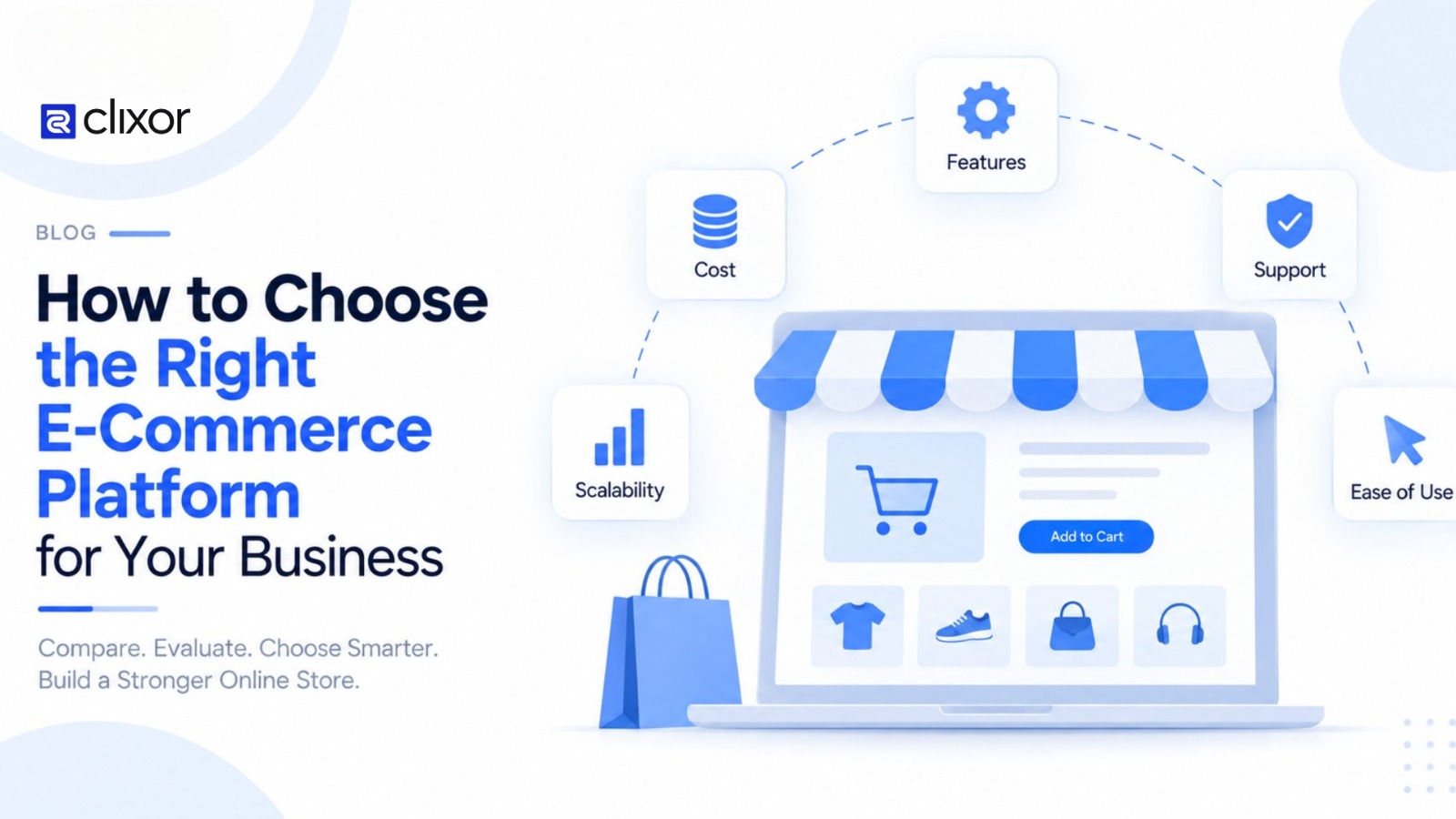
How to Choose the Right E-Commerce Platform for Your Business
Choosing the right e-commerce platform is an important decision for any business planning to sell products online. The platform you select affects how your online store looks, how customers shop, how orders are managed, and how easily the business can grow.
There are many e-commerce platforms available, but the best option depends on your products, business model, budget, technical requirements, and plans. Instead of choosing a platform only because it is popular, businesses should first understand what their online store actually needs.
- What Is an E-Commerce Platform?
- How to Choose the Right E-Commerce Platform?
- Ready-Made Platform or Custom E-Commerce Development?
- Frequently Asked Questions
- Conclusion
What Is an E-Commerce Platform?
An e-commerce platform is software that helps businesses create and manage an online store. It can provide features for product management, shopping carts, payments, orders, customers, inventory, and other store operations.
Some platforms offer ready-made features, while others provide more flexibility for customisation and integration.
How to Choose the Right E-Commerce Platform?
The right e-commerce platform should support your current requirements while giving you enough flexibility for future growth. Consider these factors before making a decision.
1. Understand Your Business Requirements
Start by listing what your online store needs.
Consider the number of products, product variations, payment methods, shipping requirements, customer accounts, discounts, inventory management, and other important features.
For example, a business selling a small number of standard products may need a simpler platform than a company managing thousands of products with multiple variations.
2. Check Customization Options
Every business does not operate in the same way.
Check whether the platform allows you to customize the store design, checkout process, product pages, customer experience, and business workflows. If your requirements are highly specific, you may need a platform that provides greater development flexibility.
3. Consider Payment and Shipping
Payment and delivery are essential parts of an online store.
Before selecting an e-commerce platform, check whether it supports the payment gateways, currencies, shipping providers, and delivery methods required by your business and customers.
A smooth checkout and delivery process can make the buying experience easier.
4. Look at Integration Options
Your online store may need to connect with other business systems.
For example, you may want to connect your store with accounting software, CRM systems, inventory tools, marketing platforms, or shipping services.
Good integration options can reduce manual data entry and make different parts of the business work together.
5. Think About Scalability
Your e-commerce platform should be able to support your business as it grows.
Consider future requirements such as more products, higher order volumes, additional users, new locations, or new sales channels. Choosing a platform only for today's needs may create limitations later.
6. Compare Total Costs
Do not look only at the initial platform price.
Consider subscription charges, development costs, payment fees, additional applications, hosting, maintenance, customization, and future upgrades. Comparing the overall cost can give you a clearer picture of what the platform will require over time.
Ready-Made Platform or Custom E-Commerce Development?
A ready-made platform can be suitable when a business needs to launch quickly, and its requirements match the available features.
Custom e-commerce development may be more appropriate when the business needs unique workflows, specialized integrations, or a highly customized customer experience.
The right choice depends on the complexity of the business rather than simply choosing one option over another.
Frequently Asked Questions
1. What is the best e-commerce platform for a business?
There is no single best platform for every business. The right choice depends on products, budget, features, integrations, customers, and growth plans.
2. Should a small business use a ready-made e-commerce platform?
A ready-made platform can be a practical choice when the business has straightforward requirements and wants to launch without extensive development.
3. When should a business choose custom e-commerce development?
Custom development can be considered when standard platforms cannot support important business workflows, integrations, or customer experience requirements.
4. What features should an e-commerce platform have?
Important features may include product management, payments, order management, inventory, customer accounts, discounts, shipping integration, analytics, and security controls.
5. Can an e-commerce platform be integrated with other software?
Yes. Depending on the platform and available integration methods, an online store can connect with systems such as CRM, accounting, inventory, payment, and shipping applications.
Conclusion
Choosing the right e-commerce platform for your business requires more than comparing popular platforms. You need to consider your products, customers, daily operations, integrations, budget, customization needs, and future growth.
A suitable platform should make it easier to manage the store today while giving your business room to develop tomorrow.
At Clixor Technologies, e-commerce solutions can be planned around specific business requirements, customer needs, integrations, and long-term objectives.