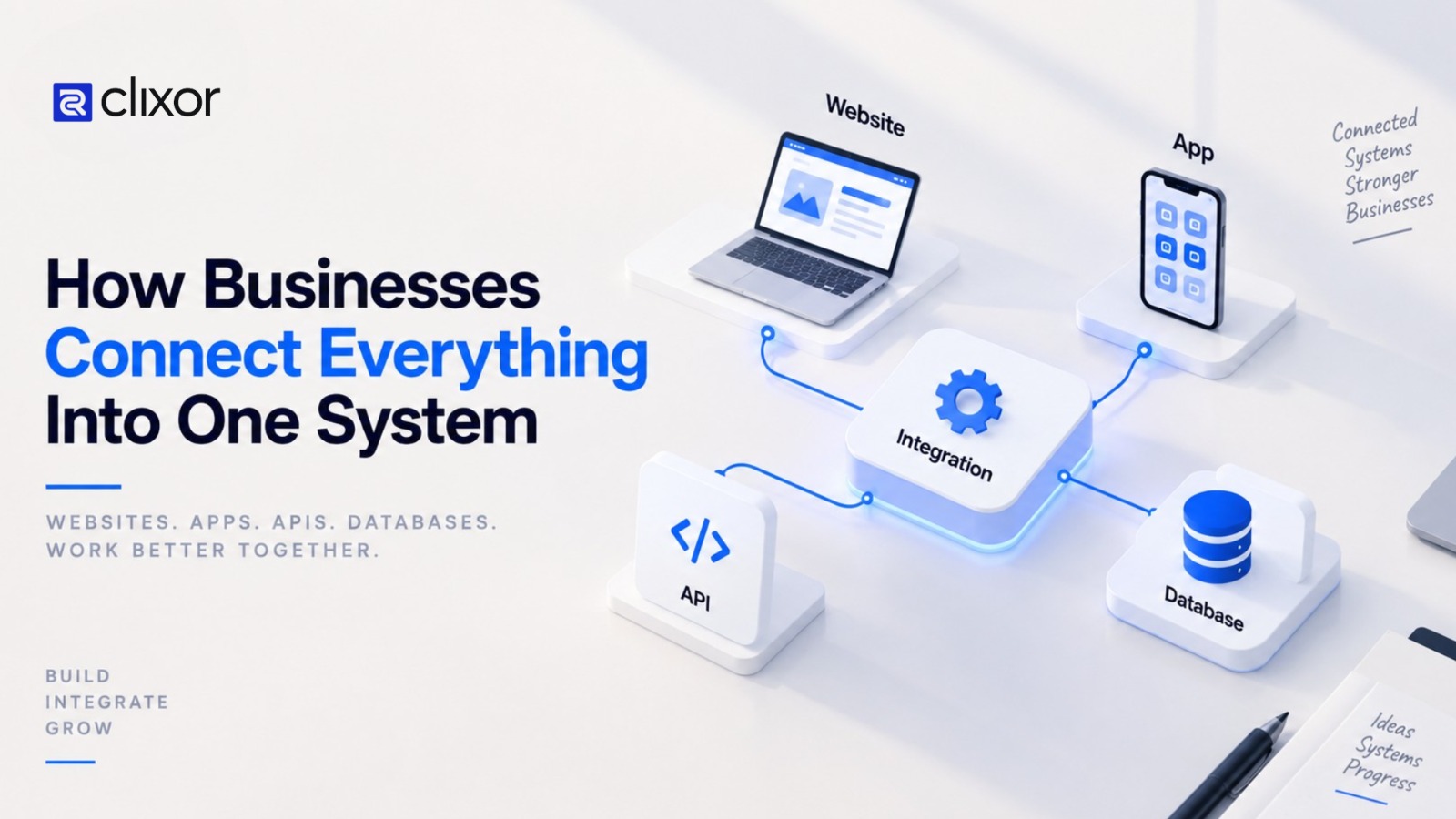
How Businesses Connect Websites, Apps, APIs, and Databases Into One System
Businesses often use multiple digital systems to manage different parts of their operations. A website may handle customers, a mobile app may support employees or users, and a database may store important business information. APIs connect these systems.
Without proper integration, employees may need to enter the same information into multiple systems. This creates extra work and makes it harder to keep data accurate. API integration helps businesses connect these systems and create a more coordinated technology environment.
- What Is API Integration?
- 1. Connect the Website With the Backend
- 2. Connect Mobile Apps to Business Systems
- 3. Use APIs to Connect Different Software
- 4. Connect Applications With Databases
- 5. Automate Data Between Systems
- 6. Protect Data During Integration
- 7. Build an Integration That Can Grow
- FAQs
- Conclusion
What Is API Integration?
API integration connects different software applications so they can exchange information and work together.
An API acts as a communication layer between systems. For example, when a customer places an order through an e-commerce website, the website can send the order information to a backend system through an API. The backend can then update the database and trigger other processes.
This allows different applications to work together without requiring them to use the same technology.
1. Connect the Website With the Backend
A business website often needs to communicate with backend services that manage customers, products, orders, payments, or other information.
Instead of storing everything directly within the website, the frontend can request information from backend APIs. This creates a structured way for the website to access and update business data.
For example, an online store can use APIs to display current product information and send completed orders to its backend system.
2. Connect Mobile Apps to Business Systems
Mobile applications often need access to the same information used by websites or internal systems.
Through website and app integration, a mobile app can communicate with backend APIs to retrieve customer accounts, product information, order details, notifications, and other data.
This allows businesses to provide a consistent experience across web and mobile platforms.
3. Use APIs to Connect Different Software
Businesses may use CRM, ERP, accounting, inventory, payment, shipping, and other software systems.
Business system integration allows these applications to exchange relevant information. For example, when an order is placed, the information could move from an e-commerce application to an inventory system and then to a shipping platform.
This reduces the need to manually transfer the same information between systems.
4. Connect Applications With Databases
Databases store important information such as customer records, products, transactions, and application data.
Applications typically communicate with databases through backend services rather than allowing users to directly access the database. This approach can help control how information is created, retrieved, and updated.
Good database integration also requires attention to data structure, security, permissions, and performance.
5. Automate Data Between Systems
Integration becomes especially useful when businesses want to automate repetitive processes.
For example, a new customer registration on a website could automatically create or update a customer record in a CRM. Similarly, a completed payment could update an order status in another system.
Automation reduces repetitive manual tasks and helps information move between connected systems.
6. Protect Data During Integration
Connecting systems also means businesses need to consider security.
APIs should use appropriate authentication and authorisation methods. Businesses should control which systems can access specific information and monitor important API activity.
Sensitive information should be handled according to the application's security and compliance requirements.
7. Build an Integration That Can Grow
As a business expands, it may add new applications, services, or digital channels.
A well-planned software integration approach should make it easier to connect additional systems without creating unnecessary dependencies. Clear API design, documentation, monitoring, and scalable architecture can help maintain integrations as requirements change.
FAQs
What is API integration?
API integration connects different software applications so they can communicate and exchange information.
Why do businesses need API integration?
Businesses use API integration to connect different systems, reduce manual data entry, automate workflows, and improve information sharing.
Can a website and mobile app use the same API?
Yes. A website and mobile application can communicate with the same backend APIs when the system is designed to support both platforms.
How do APIs connect to databases?
Applications generally communicate with databases through backend services or APIs. These services control how data is retrieved, created, or updated.
What systems can businesses integrate?
Businesses can integrate websites, mobile apps, CRM systems, ERP platforms, payment services, inventory systems, accounting software, shipping platforms, and other applications.
Is API integration secure?
API integration can be designed with authentication, authorization, encryption, access controls, monitoring, and other appropriate security measures.
Can API integration automate business processes?
Yes. APIs can allow information to move automatically between connected systems, reducing repetitive manual processes.
Can API integration support future business needs?
Yes. With suitable architecture and API design, integrations can be built to support additional users, applications, data, and business requirements over time.
Conclusion
Connecting websites, mobile apps, APIs, and databases can create a more connected business technology environment. API integration allows different applications to exchange information while supporting automation and smoother workflows. Strong integration planning helps businesses keep systems coordinated as needs change.
The goal is not simply to connect every available system. Businesses should identify which systems need to communicate, what information needs to move between them, and how those connections should be secured and maintained. This keeps integration focused, practical, and ready to support business needs.
Clixor Technologies can develop custom software and integration solutions based on specific business requirements, helping organisations connect their digital systems and build more efficient technology workflows.