Why Google Doesn't Rank Every Website
- Introduction
- How Google Ranks Websites
- Why My Website Is Not Ranking on Google
- Technical SEO Best Practices Matter
- Long-Tail Keywords Help Improve Organic Search Rankings
- SEO Is a Long-Term Investment
- Conclusion
Launching a website is an important milestone for any business, but many people assume that once their website is live, it will automatically appear on Google's first page. Unfortunately, that's not how search engines work. Google indexes billions of web pages and carefully decides which ones deserve to rank based on quality, relevance, and user experience.
If you've been asking Why My Website Is Not Ranking on Google, you're not alone. Many websites struggle to gain visibility because they don't meet Google's quality standards. Understanding How Google Ranks Websites is the first step toward improving your online presence and attracting more organic traffic.
How Google Ranks Websites
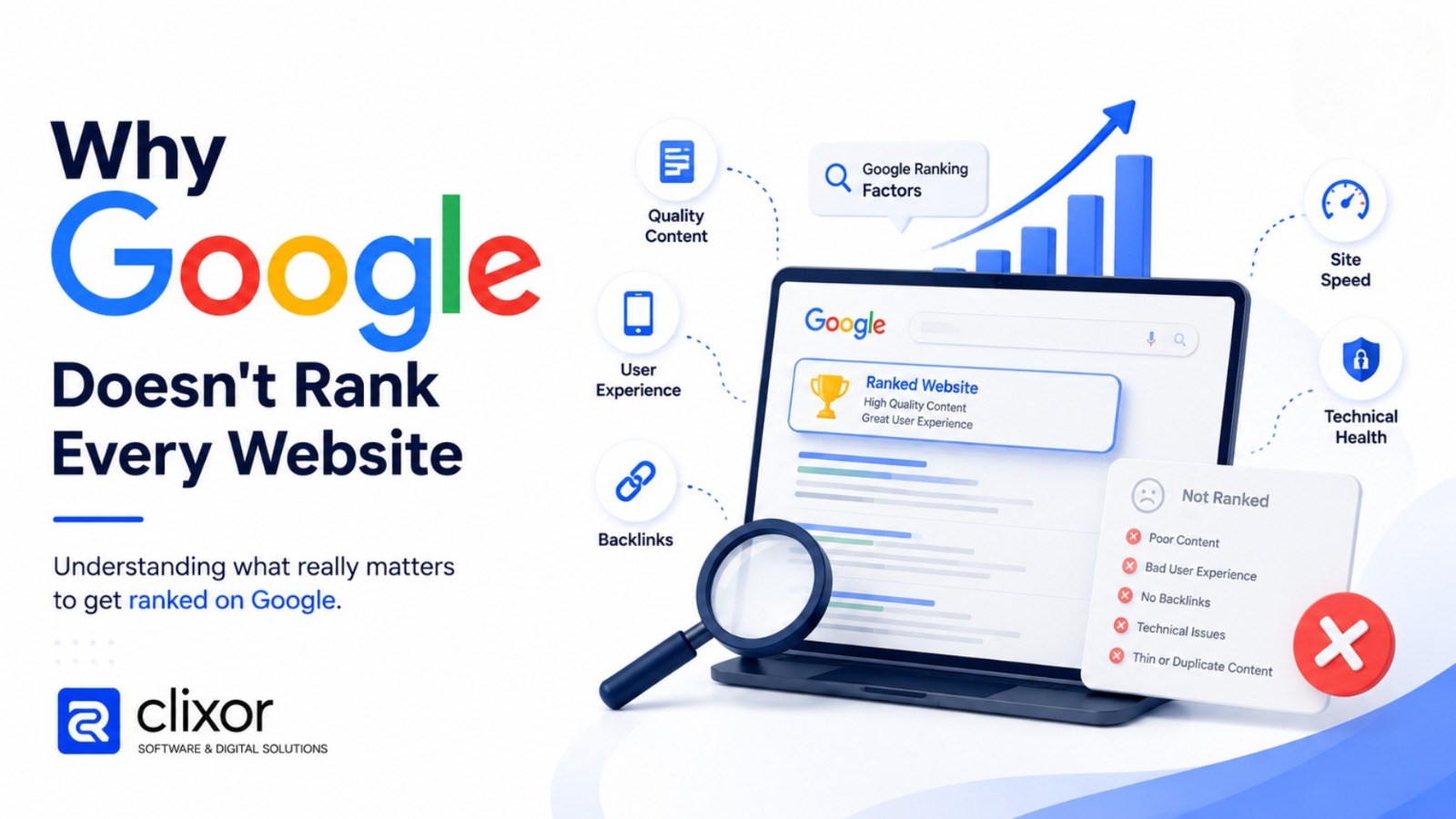
Google's goal is to deliver the most relevant and helpful information for every search. Instead of ranking every website equally, it evaluates hundreds of Google Ranking Factors to determine which pages provide the best experience for users.
Some of the most important ranking factors include:
High-Quality, Original Content
Fast Website Loading Speed
Mobile-Friendly Website Design
Strong Technical SEO Best Practices
Relevant Keywords That Match Search Intent
Quality Backlinks From Trusted Websites
Positive User Experience and Engagement
Google doesn't look at just one factor. It analyzes the overall quality of your website before deciding where it should appear in search results.
Why My Website Is Not Ranking on Google
There are many reasons why a website may not rank well, even if it looks professional. One of the most common issues is that the content doesn't fully answer what users are searching for. Google prefers pages that provide clear, valuable, and trustworthy information instead of content created only to include keywords.
Another common mistake is publishing a website and expecting immediate results. SEO and digital marketing are ongoing processes that require regular updates, content improvements, continuous optimization, and a well-planned content strategy to improve long-term search visibility.
Some Common Reasons Your Website May Not Rank Include
- Low-quality or duplicate content
- Weak Website SEO Optimization
- Slow website performance
- Poor internal linking
- Lack of quality backlinks
- Outdated or rarely updated content
Fixing these issues gradually improves your website's authority and helps Google understand that your content deserves better visibility.
Technical SEO Best Practices Matter
Even the best content may not perform well if search engines cannot properly crawl or understand your website. This is why following Technical SEO Best Practices is essential for long-term SEO success.
A technically optimized website makes it easier for Google to index your pages while also providing visitors with a better browsing experience.
Focus on improvements such as:
- Optimizing website loading speed
- Making every page mobile responsive
- Fixing broken links and crawl errors
- Writing optimized meta titles and descriptions
- Creating a clear internal linking structure
- Securing your website with HTTPS
These improvements may seem small individually, but together they create a strong SEO foundation that supports higher rankings over time.
Long-Tail Keywords Help Improve Organic Search Rankings
Many businesses make the mistake of targeting only broad keywords with high competition. A better approach is to focus on Long-Tail Keywords for SEO, which reflect exactly what users are searching for.
For example, instead of targeting only "SEO," you can create content around searches like:
- How to Improve Google Rankings
- How to Rank Higher on Google Search
- How to Get Your Website on Google's First Page
- Best SEO Strategy for Business Websites
These keywords usually attract visitors who already know what they're looking for, making them more likely to engage with your business. Combined with valuable content, they can significantly Improve Organic Search Rankings over time.
SEO Is a Long-Term Investment
Many businesses expect SEO to deliver results within a few weeks. In reality, Google needs time to crawl your website, understand your content, and compare it with thousands of competing pages.
Consistently publishing helpful content, improving your website, and following SEO best practices builds trust over time. The businesses that invest in long-term SEO are the ones that achieve sustainable rankings instead of short-term spikes in traffic.
Conclusion
Understanding Why Google Doesn't Rank Every Website helps businesses focus on the strategies that truly influence search rankings. Strong SEO isn't about shortcuts or keyword stuffing—it's about creating valuable content, improving Website SEO Optimization, following Technical SEO Best Practices, and providing an excellent experience for every visitor.
At Clixor Technologies, we help businesses build modern, high-performance websites that support long-term digital growth. A well-designed, fast, and user-friendly website provides the strong foundation needed for better search visibility, improved user experience, and sustainable online success.