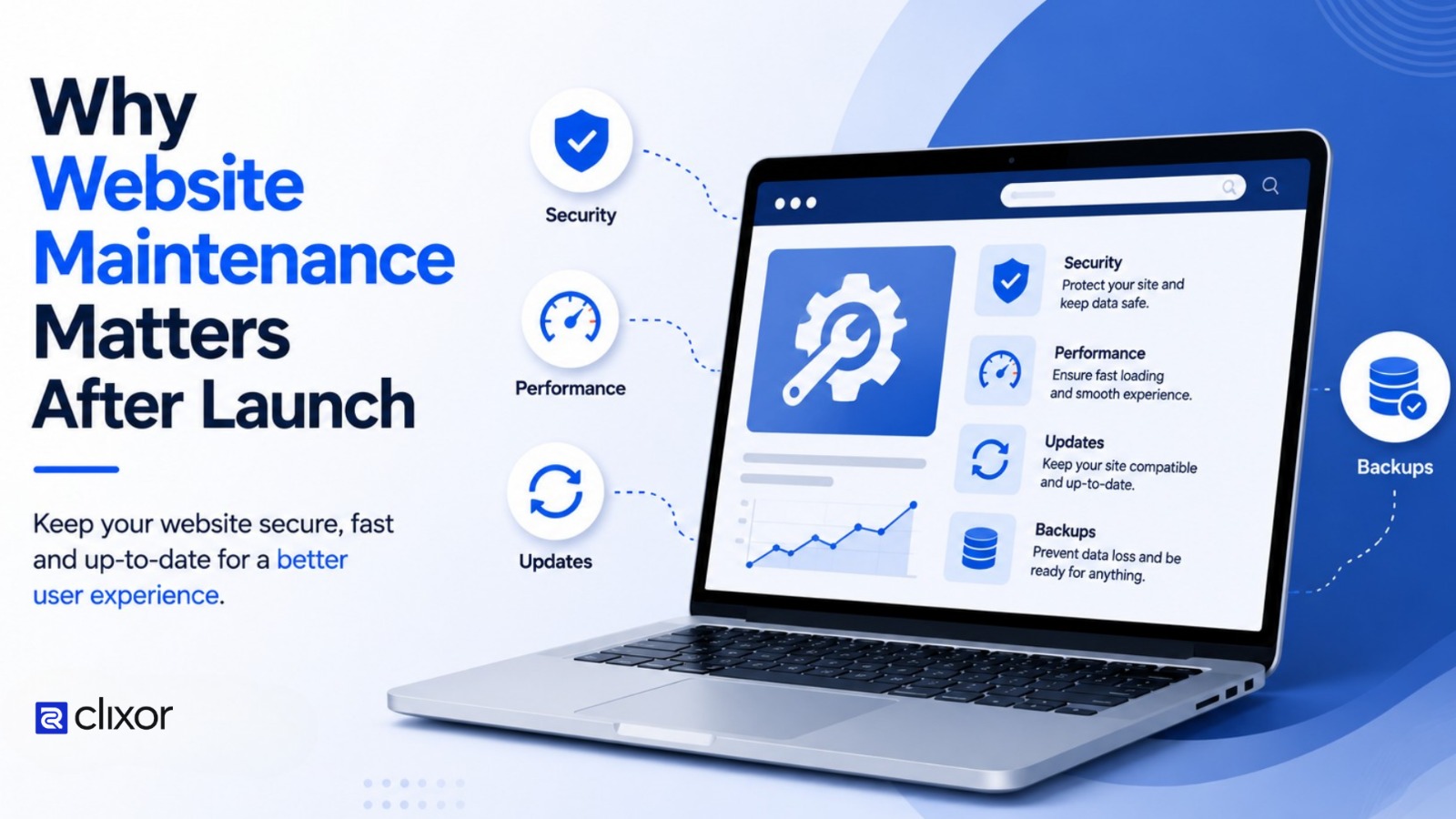
Why Website Maintenance Matters After Launch
Launching a website is an important step for any business, but it does not end there. Once the site goes live, it needs ongoing attention to stay secure, fast, functional, and up to date.
Website maintenance helps businesses prevent technical issues, protect their site, improve user experience, and keep important information accurate. As a result, even a well-built website can develop problems over time without it.
- What Is Website Maintenance?
- Why Is Website Maintenance Important?
- What Does Website Maintenance Include?
- How Website Maintenance Supports SEO
- How Often Should a Website Be Maintained?
- Benefits of Professional Website Maintenance
- Conclusion
What Is Website Maintenance?
Website maintenance is the process of regularly checking, updating, and improving a website after launch. It can include security updates, backups, performance checks, content updates, broken-link checks, and fixing technical issues.
Web technologies continue to change. Software receives updates, browsers change, security risks evolve, and business information may need to be updated. Regular maintenance helps a website keep up with these changes.
Why Is Website Maintenance Important?
1. Keeps Your Website Secure
Website security requires ongoing attention. Websites often use frameworks, plugins, libraries, hosting services, and third-party integrations that may need updates.
Regular maintenance can include applying security patches, updating software, reviewing access permissions, and keeping reliable backups.
For example, if a website continues to use an outdated plugin after a security issue is discovered, it may create unnecessary security risks. Keeping website components updated helps reduce such risks.
2. Prevents Technical Problems
A website can develop problems even when it was working perfectly after launch. Forms may stop working, links may become broken, or an integration may fail after an update.
Regular website checks help identify these issues before they have a bigger impact.
For example, if a contact form stops sending enquiries, visitors may continue using the form without knowing that their messages are not reaching the business. Regular testing can help catch this problem quickly.
3. Maintains Website Performance
Website performance can change as new content and features are added.
Large images, additional scripts, plugins, videos, and third-party tools can make a website heavier over time. Regular maintenance helps identify performance issues and keep pages running smoothly.
Common performance tasks include:
- Optimizing images
- Removing unnecessary files
- Reviewing scripts and plugins
- Checking page loading speed
- Monitoring server resources
A website that performs well provides a better experience for visitors.
What Does Website Maintenance Include?
Website maintenance covers several important areas.
Security Updates
Keeping software, plugins, frameworks, and other components updated helps address known issues and maintain website security.
Backups
Regular backups provide a recovery option if website files or data are accidentally deleted, corrupted, or affected by a technical problem.
Broken Link Checks
Links can become outdated when pages are removed or URLs change. Checking links regularly helps keep website navigation reliable.
Content Updates
Business information can change over time. Services, contact details, product information, pricing, and other important content should be reviewed and updated when necessary.
Performance Checks
Regular performance reviews can identify slow pages, large files, unnecessary scripts, or other elements affecting the website experience.
How Website Maintenance Supports SEO
Website maintenance can also support technical SEO.
Search engines need to crawl and understand websites effectively. Technical issues such as broken links, incorrect redirects, slow pages, missing pages, and poor mobile usability can affect the overall search experience.
Regular maintenance can help identify and fix these issues.
However, maintenance alone does not guarantee better rankings. SEO also depends on useful content, relevance, website authority, competition, and other technical factors.
How Often Should a Website Be Maintained?
The maintenance schedule depends on the type and complexity of the website.
Basic checks such as backups, security monitoring, and important functionality should be handled regularly. A more detailed monthly review can cover software updates, broken links, performance, content, and technical issues.
Larger websites and web applications may require more frequent monitoring because they often have more users, integrations, and technical components.
The main goal is consistency. Waiting until something breaks can make a small issue more difficult to manage.
Benefits of Professional Website Maintenance
For businesses without an in-house technical team, professional website maintenance can make ongoing website management easier.
A maintenance service can help with:
- Security updates
- Backups
- Bug fixing
- Performance optimization
- Content updates
- Technical monitoring
- Software updates
- Ongoing improvements
At Clixor Technologies, businesses can get ongoing technical support to keep their websites functional, secure, and ready to adapt as their requirements change.
Conclusion
A website should not be treated as a one-time project. After launch, it needs regular updates and attention to continue delivering a good experience.
Website maintenance helps businesses keep their websites secure, functional, fast, and up to date. Regular security checks, backups, performance optimization, content updates, and technical monitoring can help prevent avoidable problems.
At Clixor Technologies, we help businesses maintain reliable and well-performing websites with ongoing technical support and improvements. A successful website is not only one that launches successfully. It is one that continues to work well as the business grows.